Summary for Architecture & Interiors

GPT Image 2.6 Sunburst is the category leader at 1689 Elo, ahead of GPT Image 2.6 Flare at 1464 Elo. Its 225-point lead is substantial, and every one of its ten supplied images received a 9/10 overall evaluation.

Quick conclusions

  • Best broad recommendation: GPT Image 2.6 Sunburst. It most consistently combines complete briefs, detailed materials, readable architecture, and useful technical explanation.
  • Faster high-ranking alternative: GPT Image 2.6 Flare. Its recorded mean generation time is 45.4 seconds, versus 169.6 seconds for the leader. Results are more uneven across briefs.
  • Close leading alternatives: GPT Image 2.5 Sunburst, at 1417 Elo, and GPT Image 2, at 1415 Elo, are effectively tied by rating.
  • Strong non-OpenAI shortlist: Nano Banana 2.1, FLUX 3 Image, and Grok Imagine 2.0 span only 21 Elo. Choose among them by the brief rather than treating their ordering as decisive.
  • Fast iteration: Nano Banana 2 Lite averages approximately 3.35 seconds at 985 Elo. It is useful for exploration, but less dependable for fine construction detail.

The central lesson: architectural polish is not architectural correctness. Missing transparent floors, unusable circulation, incorrect building typologies, and decorative rather than functional systems repeatedly outweigh attractive rendering.

Specialists can still surprise. Seedream 5.5 produced a 10/10 Scandinavian living room, while Muse Image delivered an exceptional glass skybridge. Neither result makes those models the strongest all-round category choice.

General Analysis & Useful Insights

1. The category leaderboard

The table is ordered only by category Elo. Judge averages and generation times provide supporting context; all listed models completed all ten category prompts.

Position Model Category Elo Overall judge average /10 Mean recorded time
1 GPT Image 2.6 Sunburst 1689 9.0 169.6 s
2 GPT Image 2.6 Flare 1464 7.7 45.4 s
3 GPT Image 2.5 Sunburst 1417 8.1 143.4 s
4 GPT Image 2 1415 7.9 131.4 s
5 GPT Image 2.5 Flare 1370 7.3 68.4 s
6 Nano Banana 2.1 1303 7.3 23.8 s
7 FLUX 3 Image 1295 7.0 50.2 s
8 Grok Imagine 2.0 1282 7.0 30.8 s
9 Qwen-Image-3.0-Pro 1262 7.3 84.4 s
10 Seedream 5.5 1249 6.9 29.2 s
11 Muse Image 1229 6.3 18.6 s

Elo and score averages produce different orderings. For example, GPT Image 2.6 Flare ranks above GPT Image 2.5 Sunburst despite a lower average judge score. Similarly, FLUX 3 Image holds 1295 Elo, versus 1095 Elo for FLUX.2 Max, although the latter has the higher judge average. The official comparison-based ranking remains the decision metric.

2. What distinguishes the leader

GPT Image 2.6 Sunburst is not merely producing attractive rooms. Its strongest recurring advantage is integrating the requested architectural program:

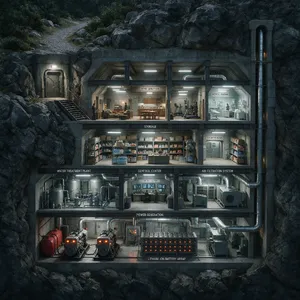
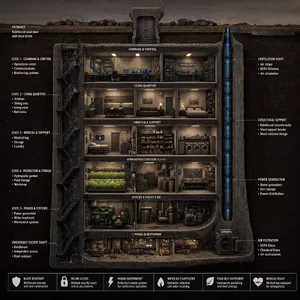
  • Rooms and circulation are explained together in the underground bunker.
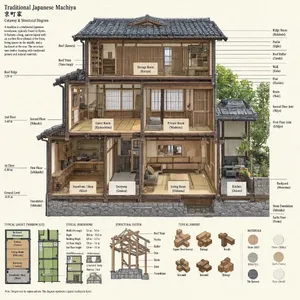
  • A recognizable narrow, deep townhouse organization anchors the machiya drawing.
  • A rotation diagram and furniture configurations support the space habitat.
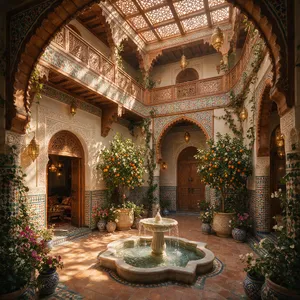
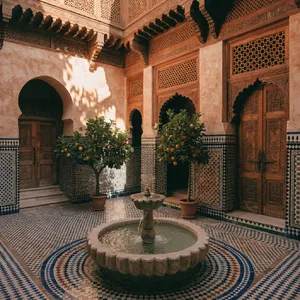
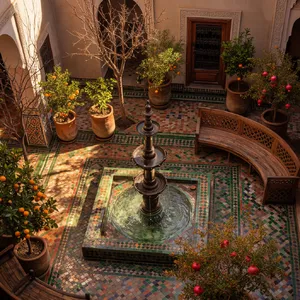
  • Tilework, timber carving, vegetation, and water retain separate identities in the Moroccan riad.

Its category criterion averages reinforce that profile: 9.4/10 adherence, 9.0/10 detail, and 8.9/10 technical quality. Yet coherence averages 8.1/10, revealing a remaining gap between persuasive presentation and fully resolved physical logic. Some connections, furniture mechanisms, textures, and projected light patterns remain idealized.

3. Completeness beats spectacle

Several models render convincing materials while missing the defining requirement.

  • Seedream 5.5 produces an elegant skybridge corridor, but carpeting removes the required transparent-floor experience. The result receives 5/10 overall despite 8/10 technical quality.
  • Z-Image Turbo creates a polished skybridge exterior, but the camera is outside rather than inside. Its 4/10 overall result contrasts with 8/10 technical quality and realism.
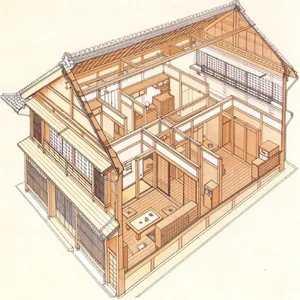
  • DALL-E 3 supplies elaborate Japanese architecture in its machiya cutaway, but the broad, monumental building does not establish the requested townhouse type.

This helps explain why DALL-E 3, at 671 Elo, can average 7.6/10 for artistry while remaining weak overall in this category. Visual impact does not recover missing architectural intent.

4. The main failure modes

A. Surface detail without material identity

Uniform grain, repeated foliage, exaggerated textile texture, and pervasive weathering can make unrelated surfaces look alike. Stronger images distinguish ceramic joints from carved timber, plaster variation from marble veining, and woven material from upholstery.

Seedream 5.5 illustrates both sides: outstanding material differentiation in its Scandinavian interior, but significant typological problems in its machiya plate. Its category artistry average is 8.4/10, while adherence is 6.9/10.

B. Unresolved circulation and systems

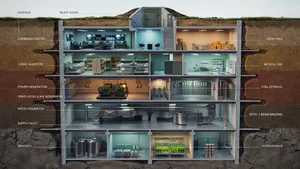
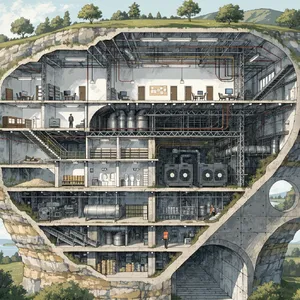
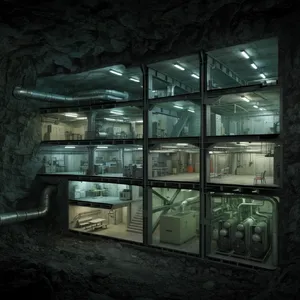
In the bunker cross-section, floors frequently lack a continuous stair or lift route. Ventilation equipment may be visible without traceable intake, exhaust, or room-supply paths. In the machiya drawing, stairs, courtyard openings, and upper-floor access are recurring weaknesses.

C. Optical effects that ignore their source

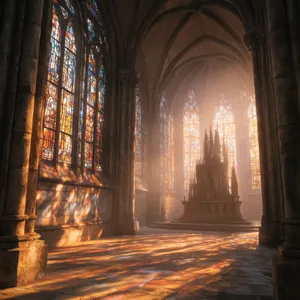
The Gothic cathedral exposes a frequent shortcut: rainbow bands or luminous floor patches that do not correspond convincingly to the glazing. Columns often remain unpatterned despite the explicit request.

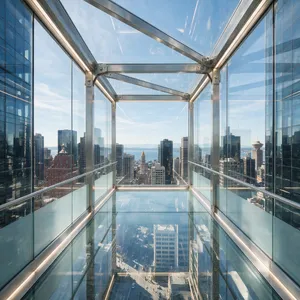
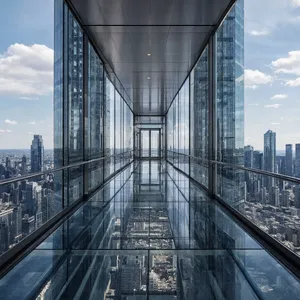
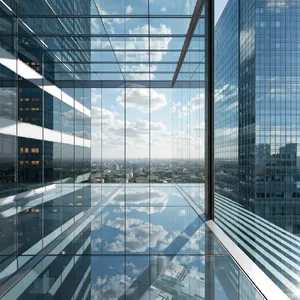
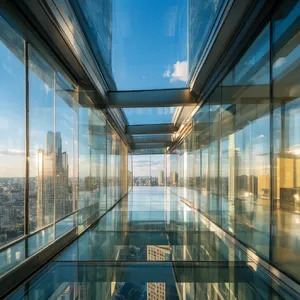
The glass skybridge reveals a related problem. Many floors act as blue mirrors rather than transparent structural glass. Successful images keep reflection, transmission, pane boundaries, and supporting members readable at once.

D. Historical motifs without historical coherence

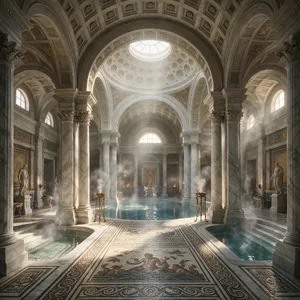
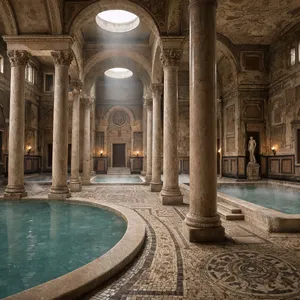
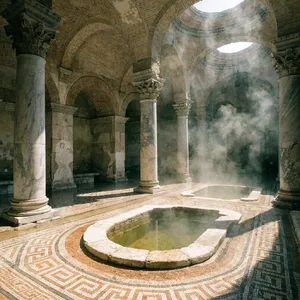
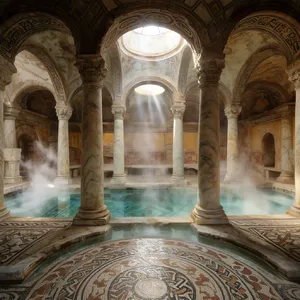
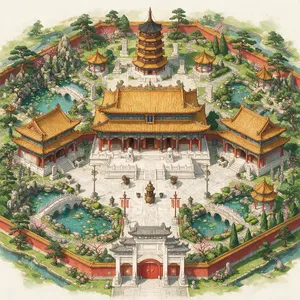
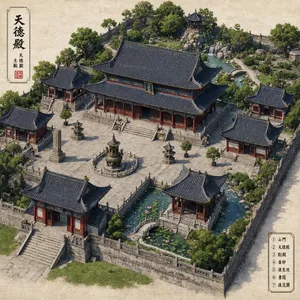
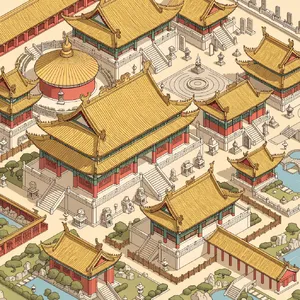
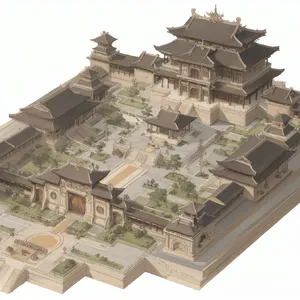
The Roman bathhouse frequently becomes a contemporary themed spa, with modern handrails, electrical fixtures, or questionable pool arrangements. The Chinese temple complex can become a fantasy palace or a collection of disconnected assets rather than an organized precinct.

E. Legible labels with incorrect meanings

Technical-looking annotations are not necessarily trustworthy. Examples include incorrect room terminology, misplaced leaders, swapped bell-and-drum tower identities, implausible scale bars, and inconsistent depth claims. Added text can make a drawing appear more authoritative while introducing new errors.

5. Performance depends strongly on the brief

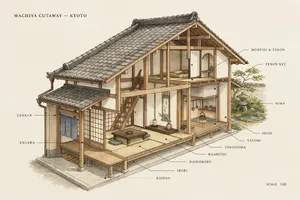
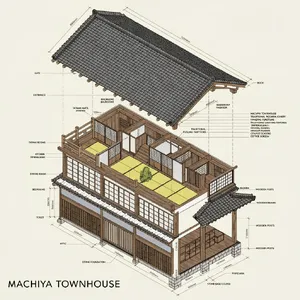
The machiya cutaway is a particularly revealing knowledge-and-organization test. Generic Japanese styling is much easier than correct townhouse proportions, service circulation, open courtyards, and demonstrable joinery.

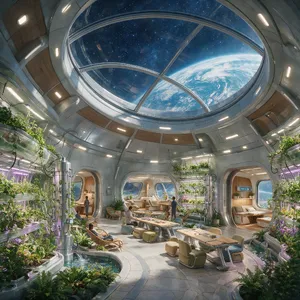
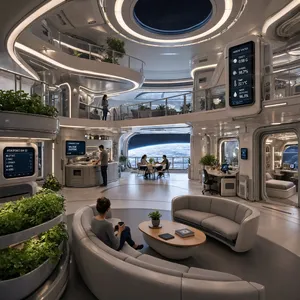
The space habitat separates attractive futuristic lounges from complete residential proposals. Sleeping quarters and adaptable furniture are often missing. Gravity displays alone do not resolve contradictory floor orientations.

By contrast, the Moroccan riad rewards fine craft surfaces and natural lighting, while the skybridge rewards optical restraint and explicit connections. This explains why models with middling category breadth can produce excellent specialist samples.

Version changes are not uniformly beneficial here. Midjourney V6.1 records 778 Elo, versus 548 Elo for Midjourney v7. In these supplied architectural results, increased visual ambition often brings less readable structure and weaker prompt fidelity. This finding should not be generalized beyond this category.

6. Speed and completion matter—but separately from quality

Nano Banana 2.1 offers a useful combination of 1303 Elo and a 23.8-second recorded mean. GPT Image 2.6 Flare is the higher-ranked alternative when approximately 45-second generation is acceptable.

Timing can be uneven. FLUX 3 Image averages 50.2 seconds, partly because its machiya generation took approximately 205 seconds.

Completion was high: 445 of 450 attempts, or 98.9%. ChatGPT 4o completed 7/10, with three logged policy blocks. MAI-Image-2.6 completed 9/10, with one content block. Seedream 5.0 Pro completed 9/10, with one technical failure. These records describe delivery behavior, not evidence that the architectural requests were inherently prohibited.

Best Models by Architectural Use Case

Default recommendation: GPT Image 2.6 Sunburst, at 1689 Elo, remains the strongest category-wide choice. The alternatives below are supported by specific samples, not separate use-case Elo rankings.

1. Photorealistic residential interiors

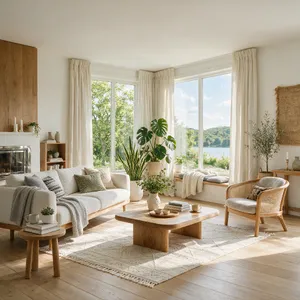
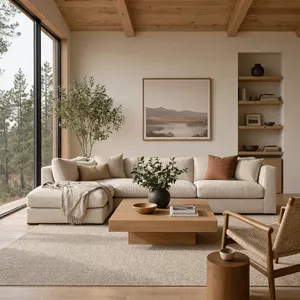
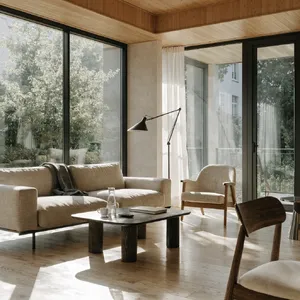
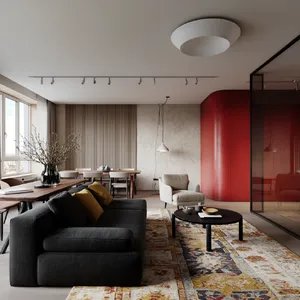
For the Scandinavian living room, prioritize believable upholstery compression, wood variation, glazing, and controlled daylight—not simply sharpness.

Recommendation: shortlist the latter two for this specific look, but retain the category leader when the project spans multiple architectural tasks.

2. Historically grounded interiors

Roman bathhouses

For the Roman bathhouse, inspect period coherence as carefully as marble and steam.

GPT Image 2.6 Sunburst provides a richly contextualized operating bath complex. GPT Image 2.6 Flare offers a convincing bath-hall alternative, also receiving 9/10 overall.

Two lower-ranked specialist candidates deserve attention: Grok Imagine (Quality) produces a weathered bath chamber with legible benches, fountains, and circulation; Ideogram 4.0 (Quality) supplies a restrained brick-vaulted bathhouse. Both receive 9/10 in this sample.

Check before use: modern fittings, pool access, steam sources, and whether paving actually reads as tessellated mosaic.

Moroccan courtyards

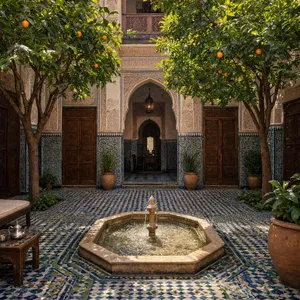
For the Moroccan riad, GPT Image 2.6 Sunburst and GPT Image 2.6 Flare are the strongest broad recommendations. The latter's courtyard example receives 10/10 for detail execution, with distinct marble, brass, timber, and ceramic joints.

For a quieter, weathered photographic character, consider Grok Imagine 2.0 and its secluded courtyard. It receives 9/10 for realism and coherence.

3. Technical cutaways and explanatory architecture

Traditional townhouse documentation

For the Japanese machiya cutaway, choose GPT Image 2.6 Sunburst. Its comprehensive architectural plate best integrates the narrow frontage, deep plan, shop-to-residence sequence, courtyard, and construction studies.

GPT Image 2.5 Sunburst offers a clear townhouse plate, while GPT Image 2 provides a comprehensive multi-view presentation. Their category ratings—1417 and 1415 Elo—are effectively tied.

Caution: even these stronger examples need terminology, plan-to-section consistency, and joint geometry checked by a knowledgeable reviewer.

Underground facilities

For the bunker cross-section, GPT Image 2.6 Sunburst provides the most complete engineering presentation, including visible stairs, lift, bracing, and differentiated utilities.

GPT Image 2.6 Flare offers a faster, polished functional section. FLUX 3 Image is a strong alternative for a less annotation-dependent bunker cutaway, with clearly depicted infrastructure.

Check before use: continuous access to every floor, emergency circulation, maintenance clearances, and separated ventilation paths.

4. Landscape-integrated exterior concepts

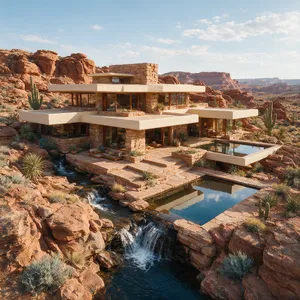
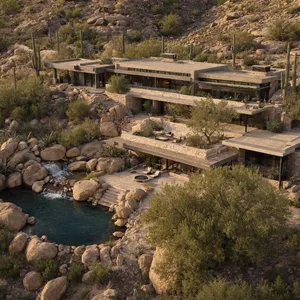
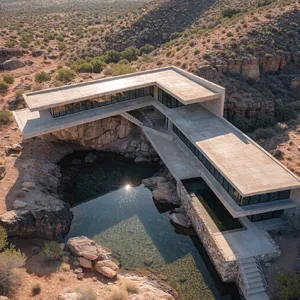
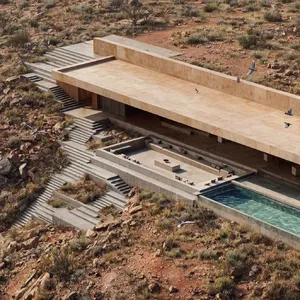
The desert Fallingwater adaptation requires more than a modern villa beside a decorative pool.

GPT Image 2.6 Sunburst remains the default. Its desert residence combines inhabited interiors, substantial masonry, and water beneath the architecture.

GPT Image 2.5 Sunburst supplies a particularly effective elevated desert view, with clear site relationships and explicit desert adaptation. For a more restrained ecological direction, Flux 2 Pro produces a useful xeriscaped residence, integrating planted gravel roofs and a modest creek.

Recommendation: request a clearly elevated camera, readable masonry anchors, shaded glazing, native planting, and a continuous downhill watercourse. These cues reduce the generic resort-villa failure mode.

5. Complex stained-glass lighting

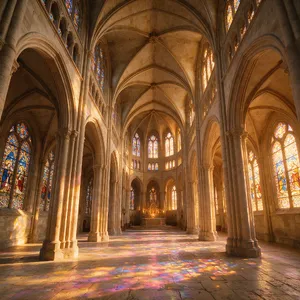
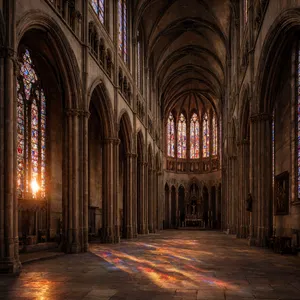
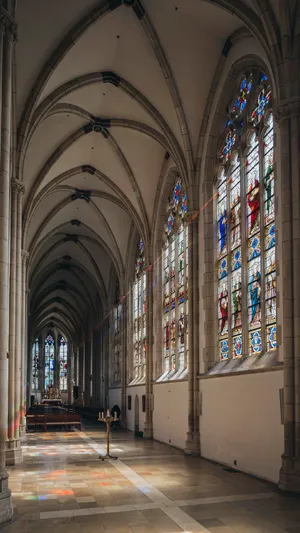
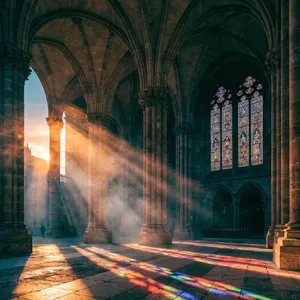
For the Gothic cathedral at sunset, GPT Image 2.6 Sunburst delivers a complete colored-light study, with patterns on both floors and columns.

GPT Image 2.5 Sunburst provides a more restrained cathedral interior, receiving 9/10 for realism and coherence. Grok Imagine (Quality) offers a strong Gothic side aisle, with legible glass figures and convincing vault relationships, although column coloration is less complete.

Check before use: light direction, pane-derived pattern structure, color wrapping around curved stone, and whether polished floors have become implausibly mirror-like.

6. Speculative habitats with functional logic

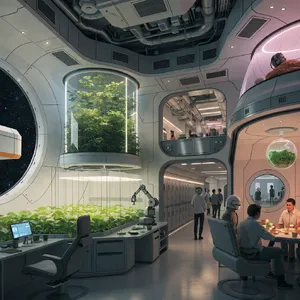
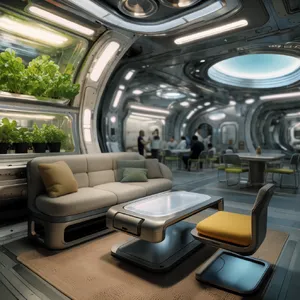
For the futuristic space habitat, GPT Image 2.6 Sunburst is the strongest recommendation. Its habitat presentation explicitly addresses rotational gravity and furniture configurations alongside agriculture, shared space, and private cabins.

GPT Image 2.6 Flare is useful for a polished furniture-focused habitat, but its gravity graphic and workstation mechanics require scrutiny. Grok Imagine 2.0 offers a convincing, largely unannotated residential habitat, with clear zoning and rich operational detail.

Recommendation: specify reachable crops, private sleeping accommodation, unobstructed circulation, and visibly deployed furniture modes. A gravity label is not a substitute for consistent spatial orientation.

7. Isometric temple complexes and cultural site illustration

For the ancient Chinese temple complex, the leading category options are GPT Image 2.6 Sunburst, GPT Image 2.6 Flare, and GPT Image 2.5 Sunburst.

Their samples emphasize different presentation needs:

FLUX.2 Max is another strong specialist candidate, supported by its detailed temple compound.

Check before use: parallel-axis projection, roof-support relationships, connected entrances, ceremonial hierarchy, and whether landscape vocabulary is culturally appropriate rather than generically East Asian.

8. Glass, structural hardware, and urban realism

For the interior glass skybridge, GPT Image 2.6 Sunburst remains the highest-rated category choice, with a strong braced skybridge example.

Several alternatives are particularly compelling on this exact brief:

Recommendation: favor visible pane edges, clamps, floor crossmembers, and a destination doorway. Reject an otherwise attractive image if it ends at a viewing barrier, uses an opaque deck, or lets reflections conceal the city below.

Practical selection rule

Use GPT Image 2.6 Sunburst for the strongest broad coverage, GPT Image 2.6 Flare for a faster high-ranking workflow, and Nano Banana 2.1 for rapid, competitive iteration. Then test specialist alternatives against the exact brief. For any technical or historical deliverable, perform a separate architectural accuracy review before publication or downstream design use.